
.
Image: Anadolu/ Contributor/Getty Images
.
Image: Anadolu/ Contributor/Getty Images
The author of The Art of the Deal always likes to claim he’s a big winner when it comes to any business arrangement he makes.
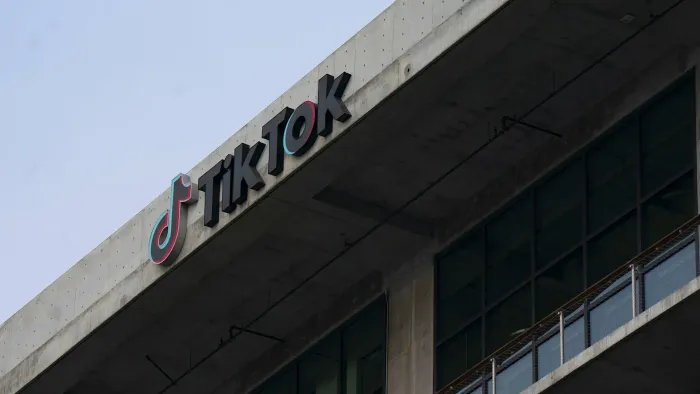
And in some ways, Donald Trump appears to have won big by finalizing a deal that will see Oracle, Silver Lake, and MGX acquire part ownership of a new joint venture designed to oversee U.S. operations of TikTok, the wildly popular social video app.
But dig into the details, and you’ll see that what Trump’s White House is keen to present as a big win for national security looks more like a standard business deal—or more cynically, a shakedown.
Concerns around TikTok first bubbled up at the end of Trump’s first term, when the 45th president, running for reelection in 2020, presented the app, owned by the Chinese tech champion ByteDance, as a national security concern. On both sides of the aisle, China hawks worry that TikTok’s algorithm could be used to catalyse opposition to the American way of life and indoctrinate U.S. teens into Chinese ways of thinking—or nudge public opinion to be more favourable to the Chinese regime.
Trump tried unsuccessfully to ban the app outright from the United States, a gambit that didn’t stand up in court. He has continued to try and alter its ownership, even as he appears to have changed tack about whether the platform ought to be banned outright.
Trump has claimed that TikTok’s purported Chinese links still give him pause, but that he was willing to allow the app to continue existing in the U.S., provided that it was brought under American control. With this finalised deal, even that’s not guaranteed, which could suggest this is little more than a shakedown and carve-out to ensure the U.S. capitalises on the only non-American social network that has managed to gain a mass global foothold in the last 20 years.
“The leaked details of this deal seem to imply that the public debate and concerns were a red herring,” says Catalina Goanta, associate professor in private law and technology at Utrecht University in the Netherlands. The U.S. “just wanted in on a profitable business model that has been growing faster and with more potential than any of its competitors,” she argues.
The terms of the agreement suggest that the joint venture will own between 45% and 50% of the new U.S.-TikTok entity (reports differ on the precise percentages involved). Around one-third of the entity will be owned by ByteDance’s current investors, with the remainder—an estimated 20% or so—still under ByteDance’s control. The deal is due to close by January 22.
Others are equally uncertain that the deal matches up to what Trump claimed was the core concern. “Will the sale enrich the new investors or protect American interests?” asks Hussein Kanji, founder of tech-focused VC firm Hoxton Ventures. “Let’s see if the algorithm changes in the new leadership to support a particular political viewpoint.”
So far, there’s no suggestion that the app’s algorithm will change in any way, beyond being fed U.S. user data to “ensure the content is free from outside manipulation,” said an internal memo sent by TikTok CEO Shou Chew to his staff last week. That isn’t significantly different from what already happens, except it draws slightly stronger fences around U.S.-only users.
The terms of the deal are believed to adopt the current TikTok algorithm, while the storage of user data within the United States will remain within the country and be overseen by a local partner. In this case, that partner will be Oracle, under terms similar to those TikTok has already instigated elsewhere voluntarily, including in Europe (U.K. cybersecurity firm NCC Group oversees data access), where TikTok has built dedicated data centres for local users. ByteDance will reportedly still have control of the app’s e-commerce, advertising, and marketing arms, all of which are core components of the business.
In short, basically nothing has changed, except that several U.S. firms get a part of the new company—and presumably, a share of its income.
It’s no surprise, then, that China has nodded the deal through: Little changes for them except for homegrown champion ByteDance losing a proportion of its income from the app. “Chinese state media sees this deal as a win for China, and it emphasized retaining ‘global connectivity,’ which can also affect what kind of content is seen from outside of the U.S.,” Utrecht University’s Goanta says.
Of course, the app could still change. It certainly would be easier to do so when U.S. companies control the data, the algorithm, and any decisions are overseen by a U.S. board. But it’d be highly unusual—some might say self-defeating—for TikTok in the United States to try and diverge from what made its global product successful.
Instead, it looks like a classic Trump deal: Plenty of sound and fury, and a whole lot of hyperbole to justify very few changes that actually address the underlying issue that caused the brouhaha in the first place. The deal allows the president to portray that action is being taken on a politically potent issue while avoiding a total ban that could alienate younger voters or provoke corporate backlash. For China, the arrangement shows that it can be flexible without surrendering, allowing ByteDance to preserve that global reach for its flagship app.
But as often happens under Trump’s America First policy, American entities get a cut of the deal—whether they’re deserving of it or not.
ABOUT THE AUTHOR
Chris Stokel-Walker is a contributing writer at Fast Company who focuses on the tech sector and its impact on our daily lives—online and offline. He has explored how the WordPress drama has implications for the wider web, how AI web crawlers are pushing sites offline, as well as stories about ordinary people doing incredible things, such as the German teen who set up a MySpace clone with more than a million users.