
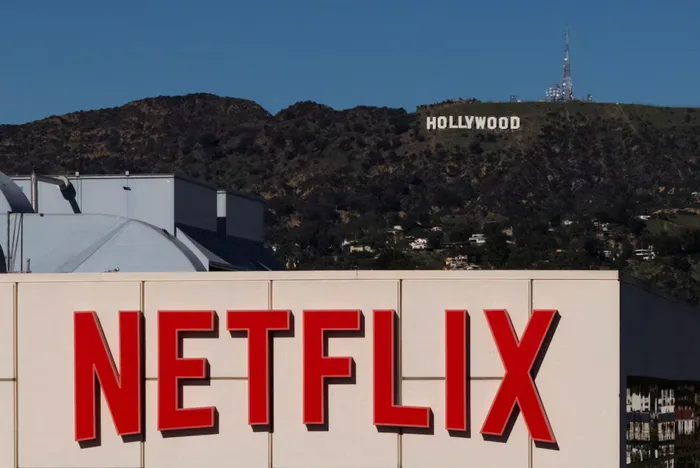
A drone view shows the Netflix logo on one of their buildings in the Hollywood neighborhood of Los Angeles, California, December 8, 2025.
Image: REUTERS/Daniel Cole/File Photo
Wake up to the shifts shaping the future.
From boardroom shakeups and billion-dollar bets to the latest tech breakthroughs rewriting the rules, The Company Brief is your front-row seat to the stories moving markets and mindsets.
We cut through the noise so you can stay ahead of the curve, one bold business move at a time.
Netflix slightly beats revenue estimates
Netflix beat Wall Street's revenue and earnings estimates for its holiday quarter on Tuesday, but its shares tumbled more than 4% in after-hours trading, as the streaming giant remains locked in a fierce bidding war for Warner Bros Discovery. The company reported results hours after amending its $82.7 billion merger agreement with Warner Bros, as it seeks to fend off a hostile bid from Paramount Skydance. Netflix reported earnings on the same day it announced its all-cash deal for Warner Bros Discovery, a transaction that all but eclipsed its fourth-quarter results. The company reported revenue of $12.1 billion for October through December, modestly exceeding forecasts of $11.97 billion, according to analysts surveyed by LSEG. Adjusted per-share earnings came in at 56 cents, slightly above estimates of 55 cents per share. The company said its results were driven in part by membership gains. The streaming service crossed 325 million paid subscribers in the quarter, up from 300 million reported in late 2024.
OpenAI to start offering chatbot ads to advertisers
OpenAI has started offering its new chatbot ads to dozens of advertisers, The Information reported on Tuesday, citing people familiar with the matter.OpenAI is asking that to a small pool of advertisers for less than $1 million in spending commitments each over a several-week trial period, with ads launching in early February, the report said. According to the report, the company is charging based on ad views rather than per-ad clicks. Reuters could not immediately verify the report. OpenAI did not immediately respond to a request for comment outside of its regular business hours. The company does not yet offer technology that lets advertisers easily buy ads themselves, but is working to get self-service ads up and running, The Information report said.
Asian shares extend selloff, global bond rout stokes fresh anxiety
Asian stocks extended their losses for a third session on Wednesday, undone by heightened tensions over U.S. threats to acquire Greenland ahead of President Donald Trump's Davos speech, while a global bond rout appeared to slow for now. Fears of offshore selling of U.S. assets - the so-called "Sell America" trade that emerged after last year's "Liberation Day" tariff announcements in April - gripped markets as Wall Street tumbled over 2% overnight and the U.S. dollar suffered its biggest fall in over a month. That sent investors fleeing to the safety of gold and silver, which both notched record highs. "The 'sell America' trade was the driving force behind major market moves overnight, as investors looked to reduce exposure to the U.S., seen by many as an unreliable partner pursuing self-defeating policies," said Mantas Vanagas, a senior economist at Westpac.
SABC TV licence days could be numbered in South Africa
Minister of Communications and Digital Technologies Solly Malatsi says the government is developing a new funding model for the SABC through tech advisory firm BMIT. This comes as the public broadcaster continues to grapple with declining advertising revenue and a decline in TV licence compliance. It was previously reported that less than 20% of South African households pay their TV licence fees. Briefing parliament last year, SABC CEO Nomsa Chabeli also told the committee that the cost of delivering the public broadcasting mandate remains significant and the public entity is currently underfunded, forcing the organisation to rely heavily on commercial revenue.