

.
Image: GCIS
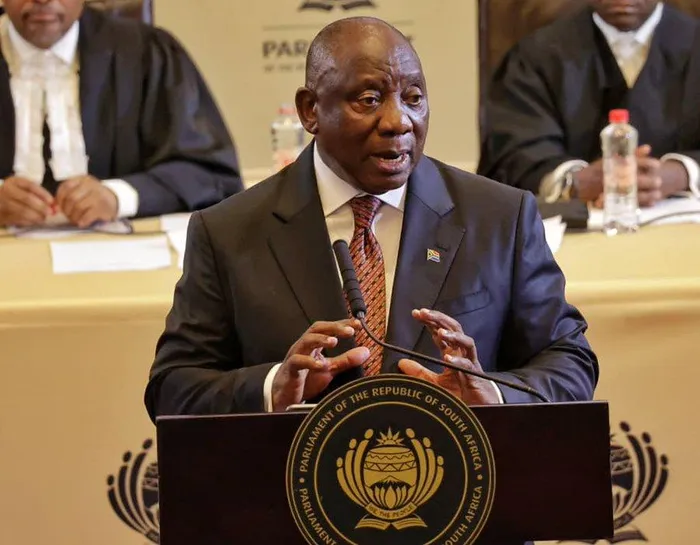
President Cyril Ramaphosa used last night’s State of the Nation Address to underline a policy agenda aimed squarely at future-facing growth sectors, with strong signals for investors in green mobility, digital government, healthcare reform and mining exploration.
Delivered in Cape Town, the address positioned South Africa as an economy pivoting towards technology, sustainability and large-scale industrial renewal, while continuing institutional groundwork in health and public services.
One of the most market-moving announcements was the government’s renewed push into the green economy.
Ramaphosa confirmed that a 150% tax deduction for investments in new energy vehicles (NEVs) will come into effect from March 2026.
The incentive is designed to catalyse local production of electric vehicles and, critically, batteries, an area where South Africa is seeking to move up the value chain rather than remain a raw-material exporter.
For automakers, component suppliers and clean-tech investors, the measure signals a longer-term commitment to building a domestic EV ecosystem aligned with global decarbonisation trends.
On healthcare, the President reiterated that preparatory work for the National Health Insurance (NHI) remains on track, with an emphasis on systems rather than sweeping overnight changes.
The current focus is on digital health records, accreditation frameworks and institutional readiness, building blocks intended to support universal health coverage over time. For health-tech firms and digital infrastructure providers, the message was clear: the state sees technology as central to fixing scale, access and accountability in healthcare delivery.
A cornerstone of the address was the confirmation that the government will implement a national digital identity system, aimed at simplifying how citizens and businesses interact with the state.
The digital ID will be rolled out via a revamped gov.za platform, positioning it as a single entry point for public services.
The move forms part of a broader digitisation drive across Home Affairs and other departments, and reflects a global shift towards digital public infrastructure as an enabler of efficiency, inclusion and trust.
Perhaps the most striking long-term growth narrative was reserved for mining. Ramaphosa described the sector as a “sunrise industry”, pointing to South Africa’s estimated R40-trillion worth of critical mineral reserves.
Government plans to unlock this potential through new funding for geological mapping and exploration, reversing years of underinvestment in early-stage mining data.
With global demand surging for minerals linked to batteries, renewable energy and advanced manufacturing, the strategy positions South Africa to compete in future-facing commodity markets, provided regulatory certainty and execution keep pace.
Taken together, these announcements suggest a SONA calibrated less around short-term relief and more around structural bets: green industrialisation, digital state capacity, foundational health reform and mineral-led growth.
It is clear that government is increasingly framing economic recovery through the lens of technology, sustainability and scale, creating opportunities and risks for business leaders willing to engage with long-horizon policy shifts rather than quick wins.
FAST COMPANY (SA)
