

.
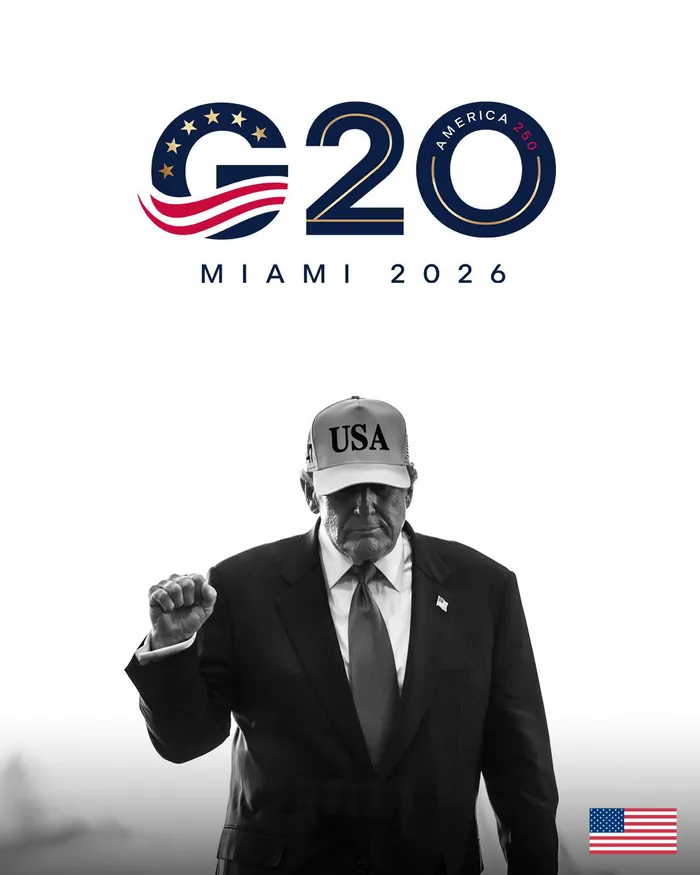
Image: G20 United States/X
When the United States Department of State declared that the U.S. assumed the 2026 presidency of the G20 earlier this week, it came with more than a shift in leadership; it also marked the onset of a visual and rhetorical rebranding.
According to press coverage, the new US-led G20 branding prominently features a bold image of President Donald J. Trump, posed with a clenched fist, signalling both a departure from the symbolism of the previous presidency and a reassertion of US leadership.
The shift looks intentional: the once-familiar G20 visual language of global solidarity gives way to imagery rooted in American identity and assertiveness.
As one insider described it, the redesign is "very simple," re-anchoring the visual identity around the American flag.
Under the outgoing 2025 presidency, held by SA, the G20 brand emphasised unity, social equity, and long-term sustainability, with its official motto reading “Solidarity, Equality, Sustainability.”
With the US now at the helm, the messaging has undergone a conspicuous pivot. The new presidency emphasises economic growth, energy security, and technological innovation as its core themes.
In effect, the rebrand replaces the inclusive, globally oriented tone of the previous G20 presidency with a more streamlined, US-centric vision: one in which prosperity is framed less as a matter of global solidarity and more as economic growth, deregulation, and national interest.
The striking imagery of Trump’s clenched fist feels less like diplomatic soft power and more like political branding: it conveys ambition, assertiveness, and a clear break from the more multilateral posture of the 2025 summit in Johannesburg.
More than aesthetics, the redesign signals a reorientation of priorities. With the visual identity now firmly tied to American national symbolism, the US presidency seems to be recasting the G20 as a vehicle for US-driven economic and technological leadership, rather than as a forum for collective global governance, development, or shared values.
By doing so, Washington appears to be staking a claim to both the narrative and direction of the G20 for the next 12 months.
