
.
Image: FC
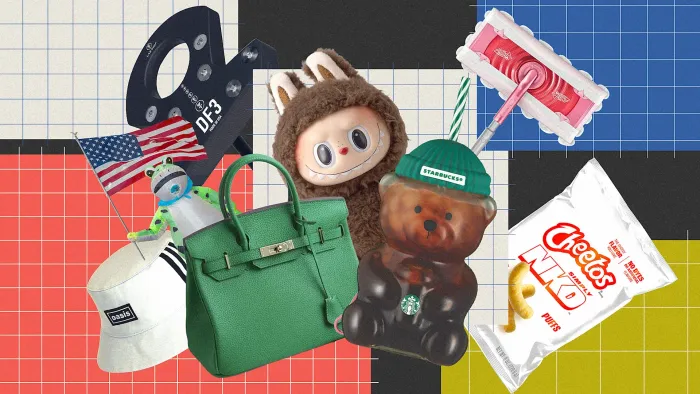
Every year the world gets a little more digital—and every year we still find surprise, delight, and meaning in the physical and the material. Like books or movies, the objects we obsessed over tell a story about the year gone by. So to continue a tradition that goes back several years now, here’s my look at the objects that tell the story of 2025: the joys, the absurdities, and the difficult-to-explain.

.
Image: Chip Somodevilla/Getty Images
To call the second Trump administration a new gilded age is less a critique than a straightforward descriptor. Most notably, the president has transformed the look of the Oval Office into a barrage of gold, from gilded statues and vases to accent pieces that Internet sleuths said were actually just painted decor from Home Depot. (Trump denied this.) While mocked as tacky by many observers, the look is of a piece with a continuing embrace of brazen material opulence, from a $1 million “gold card” visa and a massive new ballroom where the East Wing used to be, to accepting a $400 jet from the Qatari government and a newly invented “peace prize” from FIFA that involved a trophy—an “oddly gruesome” object according to The New Yorker, but a shiny one, too.
.
Image: Walmart
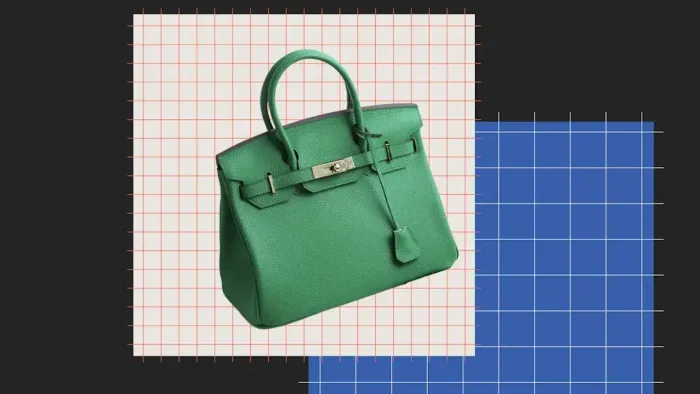
Walmart doesn’t usually find itself in the same conversation as luxury brands. But the discount behemoth’s $78 bag that echoed the design of the Hermès’ iconic $10,000-and-up Birkin was dubbed “the Wirkin” on social media. It quickly became a sensation—and an emblem of “dupe” culture, in which lower prices handily trump authenticity. That may threaten the value of some high-end brands, but actual Birkins remain coveted: The original, made for actress Jane Birkin, sold at auction for $10.9 million this year.
.
Image: Starbucks
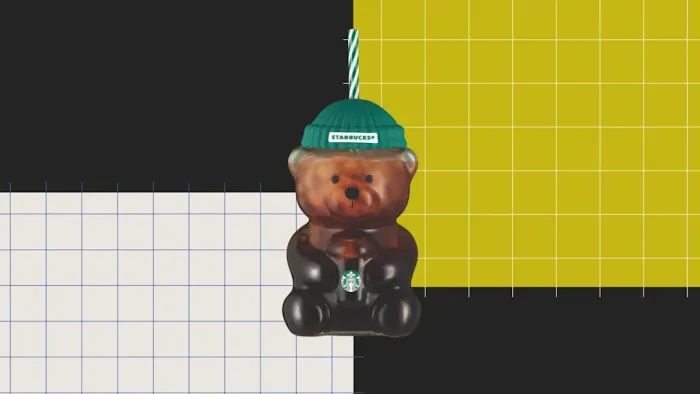
Starbucks’ attempted turnaround journey included rough patches like closing hundreds of locations and laying off employees. But the coffee giant proved it can still generate excitement—maybe more excitement than it wanted. Customers lined up at 3 a.m. to score limited-run, bear-shaped glass tumblers for $30 a pop, and sometimes getting into scuffles when there weren’t enough. But the “Bearista” cups promptly became a meme, even inspiring good-natured copycat tributes from the likes of Aldi and Walmart. Recently, Starbucks has brought the object back (on a limited basis of course) as a prize for members of its rewards program.

.
Image: RubinObs/NOIRLab/SLAC/NSF/DOE/AURA/B. Quint
In a year when science seemed under assault, the world’s largest telescope debuted with “jaw-dropping” views of space, including millions of galaxies and thousands of never-before-seen asteroids in our solar system. Decades in the works, the observatory is at the summit of a Chilean mountain, its telescope equipped with the biggest space camera ever built, with an unprecedented three-billion pixel sensor array. The result, from the start, has been stunning images.

.
Image: Stephen Lam/San Francisco Chronicle/Getty Images
Video of Seth Todd, a protester outside an ICE facility in Portland, Oregon, being chemical-sprayed by law enforcement went viral, one assumes, largely because he was wearing an inflatable frog costume. The absurdity was, after all, the point. The outfit’s success at making heavy-handed tactics look both bullying and clueless is why inflatable costumes—sharks, chickens, etc.—became a popular form of protest-wear. It’s an example of “tactical frivolity” as a form of resistance that defangs accusations of violent opposition. As one observer put it: It’s hard to be violent in a frog suit.

.
Image: P&G
If you were looking to exemplify dubious movie-product collabs, you would have a hard time dreaming up something to top the special edition pink Wicked Swiffer. The hit Wicked movies, building on the acclaimed Broadway musical, have spawned scores of products and brand collabs, as is standard practice for blockbuster IP. But there’s something about the Swiffer sweeping its way into the spotlight of a witchy story that’s irresistibly ridiculous—picture a witch zooming away on a sponge mop instead of a broom.
.
Image: Oasis Official Store
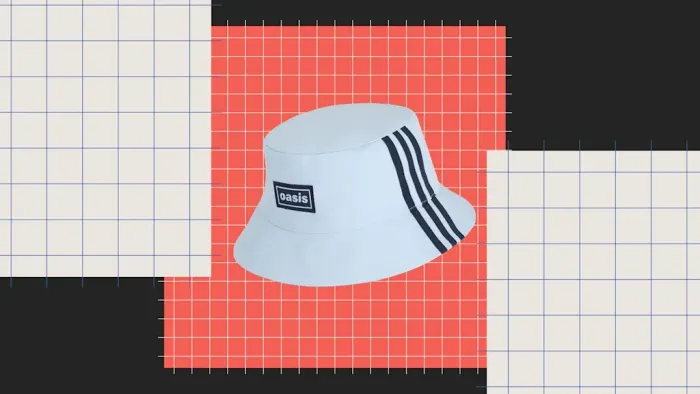
In 2025, one locus of 1990s appreciation was the lucrative reunion tour of millennial-favorite Britpop throwback rockers Oasis, making bucket hats one of the year’s Vogue-approved accessories. The floppy Gilligan-style bucket hat was part of the Gallagher brothers’ style, and apparently still is: Singer Liam clarified from the stage, “it’s a bucket hat,” to anyone mistaking his headgear for a beanie. “You’re just in a sea of bucket hats,” one concertgoer who paid $42 for an Oasis-branded hat told The Wall Street Journal, calling the effect “hilarious.”
.
Image: L.A.B. Golf
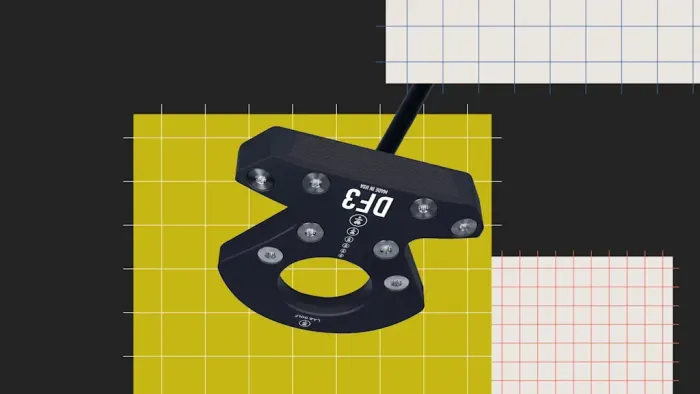
Golf is not a sport known for sudden change or progressive innovation. All the more remarkable that one of 2025’s most significant golf moments involved a weird-looking club J.J. Spaun used to sink a 64-foot putt that clinched the U.S. Open. Lie Angle Balance putters are designed to minimize torque, positioning the shaft directly into the instrument’s center of gravity, behind the head. This ends up looking like some sort of exotic barbecue tool, but their use has grown steadily on the tour and off, and this year was a breakthrough. Sales of the putter, starting at $400, are expected to triple, and a private equity fund backed by LVMH reportedly bought a majority stake in L.A.B. for $200 million.

.
Image: Microsoft
While tech pundits seem to think a desirable AI wearable is imminent (and no, the Friend ragebait ads for a product that scarcely exists don’t count), the most significant manifestation of AI mania are the data centers the technology requires. Microsoft’s Fairwater AI data center in Wisconsin has three main buildings totaling about 1.2 million square feet, its data storage systems five football fields long. Meta’s Louisiana AI campus, announced in 2025, involves over four million square feet of buildings, an industrial district of server halls, power yards, and cooling infrastructure. OpenAI’s Stargate similarly immense data center in Abilene, Texas, in progress, may ultimately require 1.2 gigawatts of power.

.
Image: PepsiCo
With skepticism of processed foods becoming a rare point of bipartisan agreement, PepsiCo is among those adding more natural, health-conscious offerings to its lineup. The most startling experiment: versions of Cheetos and Doritos without their signature orange colors—and that weird, messy, but nonetheless iconic, “dust.” The new line, dubbed Simply NKD, isn’t actually any healthier, it just doesn’t scream “industrial foodstuff” anymore. It’s a start?
.
Image: Oleksandr Pokusai/Adobe Stock
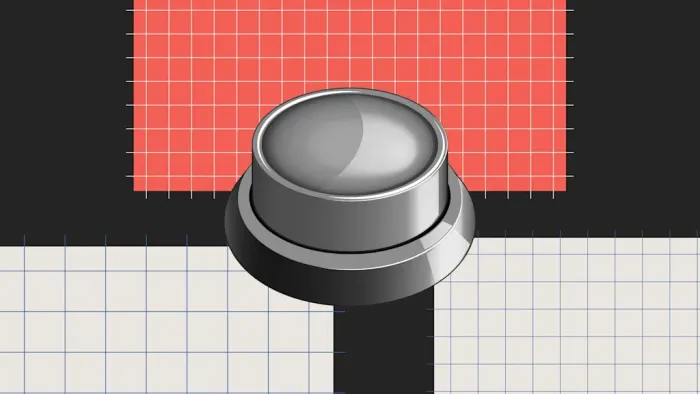
After years of swiping, tapping, and pinching, physical controls have started to show signs of a comeback. The touchscreen era has been particularly evident in auto design—and so is the recent pushback. “The data shows us physical buttons are better,” Mercedes-Benz’s chief software officer declared this year in the course of unveiling a more button-centric design strategy. Hyundai and Volkswagen are making similar moves toward bringing back buttons and knobs. The industry won’t likely swipe left on touch screens altogether, but it’s acknowledging the attraction of physical controls—at least until the robocars take over.
.
Image: cathup/Adobe Stock
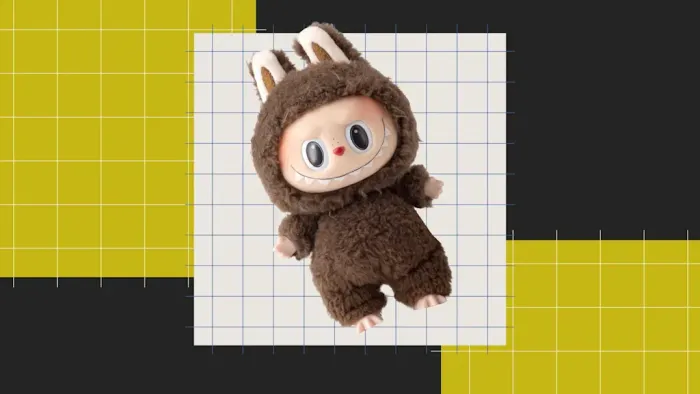
Those toothy, furry creatures hanging from everyone’s handbag weren’t a fever dream. The Labubu is very real, and the biggest collectible craze in recent memory. Created by Hong Kong artist Kasing Lung and sold by Chinese toy company Pop Mart in mystery “blind boxes,” the willfully ugly plush dolls became status symbols after K-pop star Lisa from BLACKPINK was spotted with one late last year. By 2025, celebrities from Rihanna to Kim Kardashian were clipping Labubus to their designer bags, turning the $22 accessory into a very lucrative fad. Pop Mart reported $1.9 billion in revenue for the first half of 2025—up over 200%—with Labubu accounting for a third of sales; an oversized version of the creature even joined the Macy’s Thanksgiving Day Parade. One theory of the Labubu’s appeal: the “blind box” sales strategy as an antidote to an overly algorithmic world. As one marketing professor put it: “It’s fun, it’s uncertain, and it’s social.” At least until the next trend comes along.
ABOUT THE AUTHOR
Rob Walker is a journalist and columnist covering creativity, design, technology, work, cities, the arts, and other subjects. For Fast Company, he writes Branded, a weekly column devoted to the intersection of marketing, pop culture, and current events — from presidential politics to the rise of AI, from stealthy design details to objects that shape the zeitgeist.. Walker wrote The Workologist advice column for The New York Times Sunday Business section from 2013 to 2018.