

.
Image: Ori
The design of the steel-ribbed umbrella has changed little since it was introduced in the 1850s, but the mechanical engineers and origami experts who made an umbrella that works by folding say they’ve finally improved upon it.
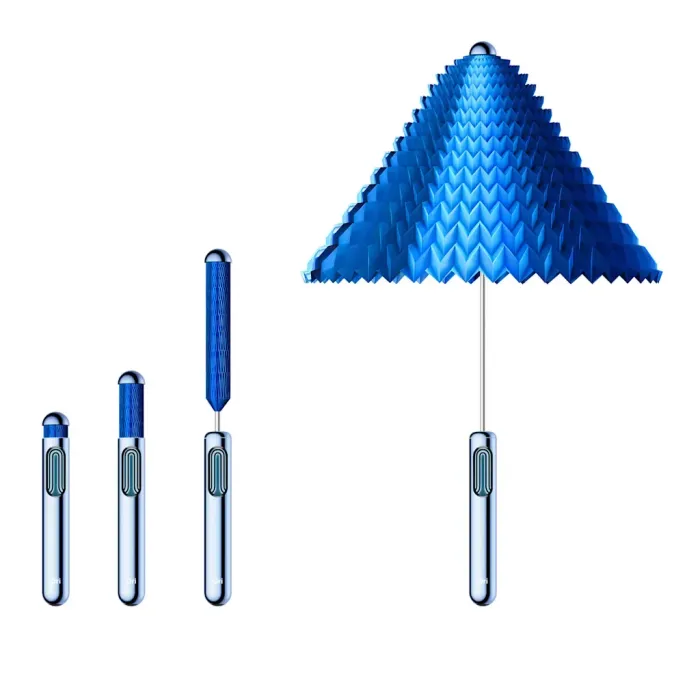
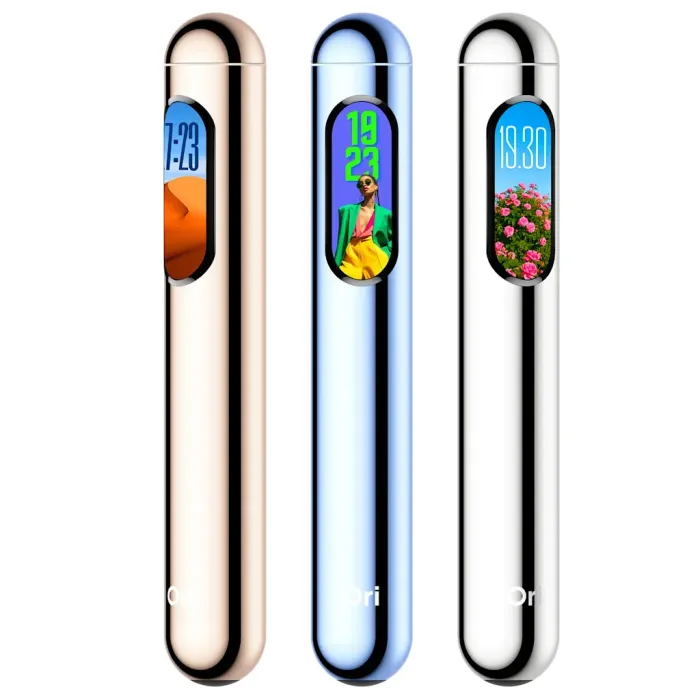
The $249 Ori umbrella has a frameless design with a laminate composite canopy, which fits into a 3.5-centimeter cylinder smart handle with an OLED display. That means there are no steel elements that can go haywire and leave you with a misshapen mess when you’re caught in a strong wind. It seems we finally have an umbrella that looks like it was invented in the 21st century.
The design team included origami experts who usually work in aerospace, research, and advanced deployable structures. And that’s where the key lay. The team used an origami technique called the the Miura-ori, invented by Japanese astrophysicist Koryo Miura in 1970, to replace the functionality of a steel frame. Miura-ori allows for a compact fold—and it has since been used in satellites.
.
Image: Ori
“Everyone owns one, yet the umbrella is a forgotten object, stuck in the past. We wanted to turn it into a modern device: smart, intentional, premium, and engineered like a modern device,” Ori founder Modestas Balcytis tells Fast Company in an email.
The canopy feels solid when it’s open, as it’s not fabric stretched over a frame, but rather a single continuous origami surface.
.
Image: Ori
“When it opens, you can feel the geometry locking into place, turning a flat surface into a strong, self-supporting structure,” Balcytis says.
The umbrella is wind resistant, unlike traditional umbrellas that can fold and turn inside out. Ori’s canopy surface is also UV resistant and lasts longer than a ribbed umbrella, according to the company. The umbrella is available now to reserve and is expected to start shipping in spring or summer 2026.
.
Image: Ori
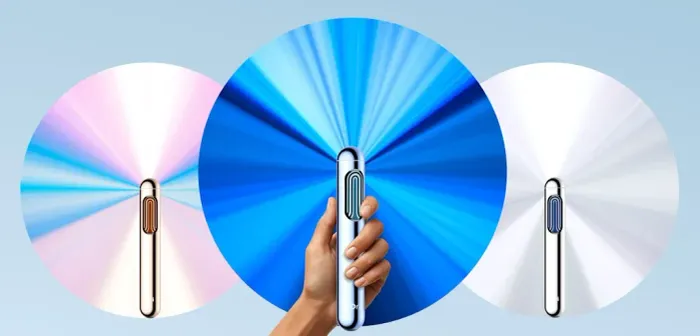
The Ori Umbrella is priced far above your standard pharmacy brand, and it’s being marketed that way: Promotional images look akin to those you might see for Dyson vacuums or Apple iPhones. The umbrella comes in blue, silver, and gold; charges with a USB-C cable; and opens and closes with a single click.
The company is pitching its product as an alternative to poorly designed ribbed umbrellas, which often break and don’t last as long. Ori says it has tested the umbrella through 400 to 500 folding cycles. This is umbrella as high tech, and the company says it has plans to design more products using the Miura-ori technique.
“Ori isn’t here to sell umbrellas,” Balcytis says. “We’re building a new language for folding objects.”
ABOUT THE AUTHOR
Hunter Schwarz is a Fast Company contributor who covers the intersection of design and advertising, branding, business, civics, fashion, fonts, packaging, politics, sports, and technology.. Hunter is the author of Yello, a newsletter about political persuasion.
