
.
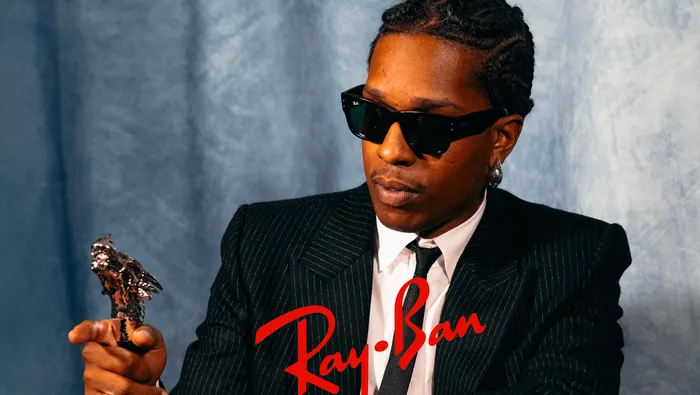
Image: Ray Ban
When A$AP Rocky was announced as part of Ray-Ban’s new creative push, it felt like less of a surprise and more like the latest move in a fashion industry that has decisively merged celebrity, culture and commerce.
Luxury and lifestyle brands have been recruiting musicians, actors and influencers as creative directors at an accelerating pace, and not just as brand ambassadors, but as people shaping product lines, campaigns and long-term aesthetic direction.
The question now facing the industry is simple: Does star power translate into sustainable profit?
Fashion houses once relied almost exclusively on trained designers rising through traditional fashion-school and atelier systems. But the 2020s reshaped that hierarchy.
Consider the growing list:
Pharrell Williams – named men’s creative director at Louis Vuitton in 2023, succeeding the late Virgil Abloh.
Rihanna – creative director, partnerships with Puma, and previously led the Fenty label with LVMH.
Jaden Smith – appointed the first men’s creative director at Christian Louboutin.
Kendall Jenner – creative director at online luxury retailer FWRD.
Cardi B – named Creative Director in Residence at Playboy.
Harry Styles – co-creative collaborator with Gucci under Alessandro Michele’s era.
Jennie – co-designed a capsule collection for Calvin Klein.
The trend cuts across luxury, sportswear and even lifestyle brands, signalling a systemic shift rather than isolated experiments.
What changed? One word: audience. Today’s global pop icons arrive with ready-made media empires:
hundreds of millions of social media followers
highly engaged fandom communities
instant viral amplification
From a marketing standpoint, appointing a celebrity creative director can replace traditional advertising budgets. A single Instagram post or campaign teaser can deliver global exposure at near-zero media cost.
Fashion insiders increasingly view these appointments as a direct response to the attention economy. Brands aren’t just buying taste, they’re buying distribution.
Christian Louboutin openly acknowledged this logic when bringing Jaden Smith onboard, highlighting the appeal of his nearly 20 million Instagram followers and the possibility of revitalising declining men’s sales.
In other words, creative direction has become a growth-hacking strategy partly.
The financial results vary, and that’s where the debate becomes interesting.
Some celebrity-led fashion partnerships have produced measurable commercial impact.
At Louis Vuitton, the appointment of Pharrell Williams coincided with a broader youth-culture and streetwear strategy that helped power parent company LVMH to a record €86.2 billion (R1.77 trillion) in revenue in 2023, with its crucial Fashion & Leather Goods division, home to Louis Vuitton, growing 14% organically and reaching more than €42 billion in sales.
Pharrell’s debut Louis Vuitton menswear show also demonstrated the scale of celebrity-driven reach: the event reportedly generated over 1 billion online views and massive social-media engagement, illustrating how star power can dramatically expand global visibility.
Similarly, Rihanna’s creative partnership with Puma delivered tangible commercial wins, with multiple Fenty x Puma releases selling out rapidly, in one instance within just 35 minutes, helping reposition the brand as fashion-forward and culturally relevant among younger consumers.
More broadly, celebrity-led capsule drops have proven effective because scarcity combined with fan-driven demand creates immediate purchase urgency, often resulting in fast sell-outs and strong direct-to-consumer performance.
Not every collaboration lands smoothly:
Some fashion consumers question whether celebrities truly hold creative authority or simply endorse projects already designed by internal teams.
Online discussions around celebrity collaborations frequently reveal scepticism about authenticity or inflated pricing.
Critics argue that branding a celebrity as “creative director” risks diminishing the title itself, turning what was historically a deeply technical role into a marketing headline.
Fashion houses continue to bet on celebrities for reasons that go far beyond follower counts.
One key factor is speed: traditional fashion cycles are slow and structured around seasonal calendars, while celebrities operate in real time, responding instantly to cultural shifts through social media.
This allows brands to stay culturally relevant between runway shows and maintain constant visibility in fast-moving digital spaces. Celebrities also offer global reach without the need for heavy localisation, a single campaign featuring a major star can resonate simultaneously in markets as diverse as New York, Seoul and Johannesburg, giving fashion houses immediate international impact.
There is also the growing influence celebrities have across industries. Musicians, actors and pop icons shape trends organically through their everyday style, effectively turning their personal wardrobes into unofficial runway showcases.
Perhaps most importantly, celebrities bring narrative power. Modern consumers increasingly buy into stories and identities rather than just products, and a celebrity’s personal brand, their lifestyle, values and cultural status, becomes intertwined with the fashion house’s own narrative, creating a deeper emotional connection with audiences.
This is arguably the most important factor, and the least traditional.
When a celebrity creative director launches a product:
The announcement trends immediately.
Fans share and amplify content.
Media coverage multiplies exposure.
Limited drops create urgency and resale hype.
The result is an ecosystem where marketing, distribution and storytelling collapse into one. For digital-native fashion houses and younger consumers, this model simply makes economic sense.
There’s also a tension within the industry.
Some traditional designers worry that celebrity appointments overshadow trained creatives who have spent decades mastering construction, silhouette and heritage techniques. Critics question whether this trend prioritises fame over craft.
Yet others argue the opposite, that creativity today is broader than technical tailoring. Cultural vision, branding fluency and community building have become design skills in their own right.
Pharrell’s appointment, for instance, reflected the luxury world’s growing fusion of music, street culture and fashion rather than a rejection of design expertise.
All signals suggest yes, but with evolution.
We are likely heading toward a hybrid model, where celebrity creative directors provide narrative, visibility and cultural direction. But behind-the-scenes design teams translate that vision into technically sound products.
The role may increasingly resemble a film director guiding a skilled production team rather than a traditional designer working alone.
And as social platforms continue to define consumer behaviour, fashion houses will almost certainly keep recruiting personalities who already command massive digital audiences.
FAST COMPANY (SA)
