

.
Image: Dr. Martens
Here’s the thing about Wellington boots: They’re great when it’s raining, because they keep your toes dry and toasty. But when the rain stops, you feel a little silly stomping around in heavy rubber boots.
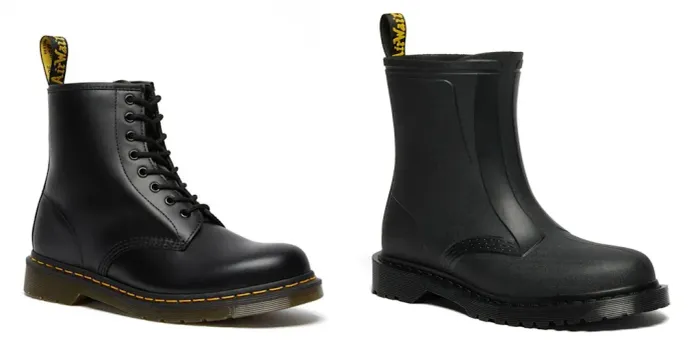
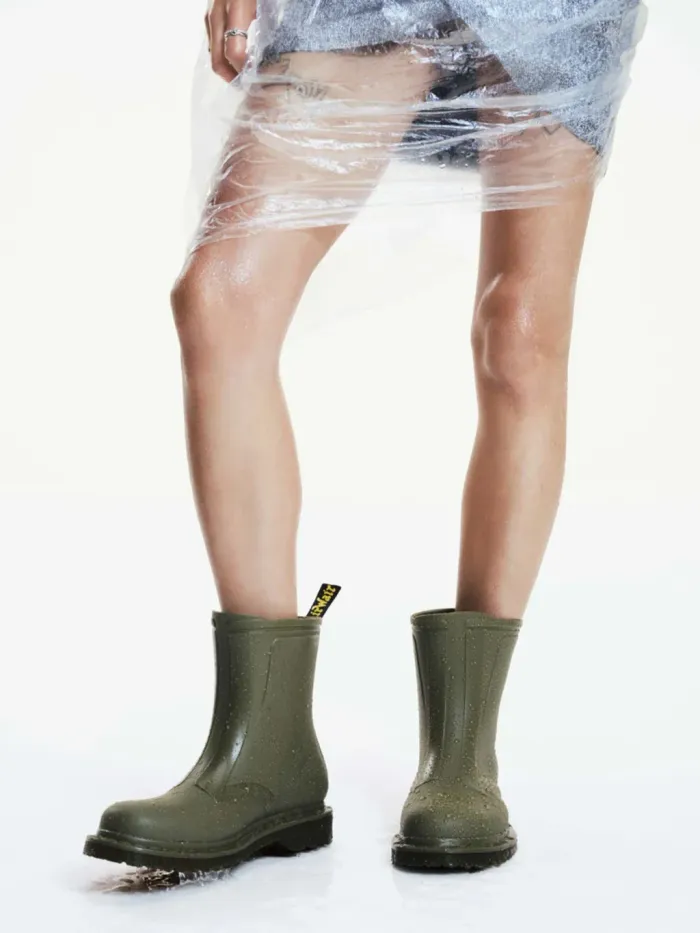
But what if your rain boots looked like any other fashion-forward boot you’d be comfortable wearing rain or shine? What if they looked like, say, a classic pair of Dr. Martens?
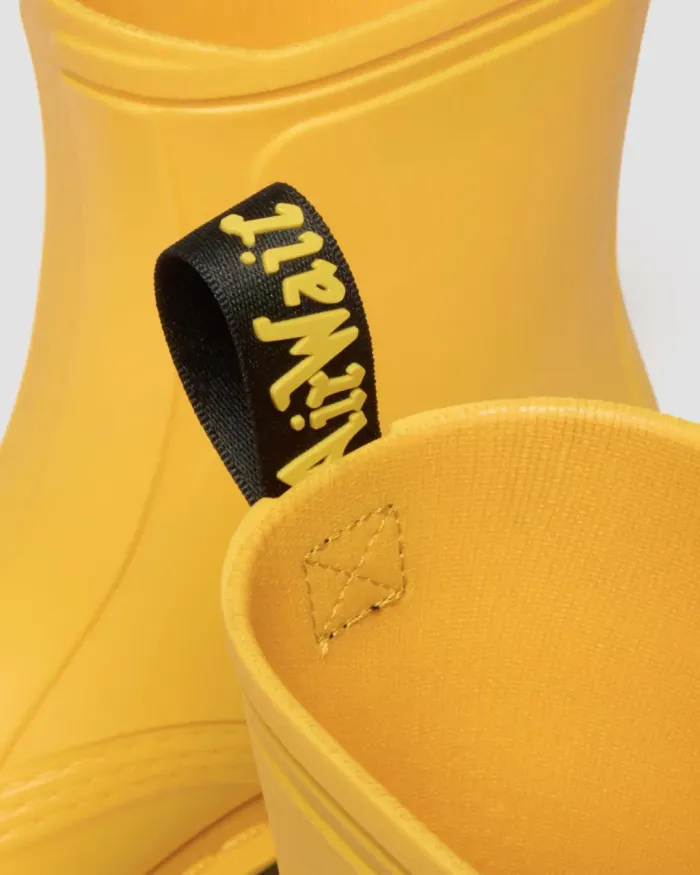
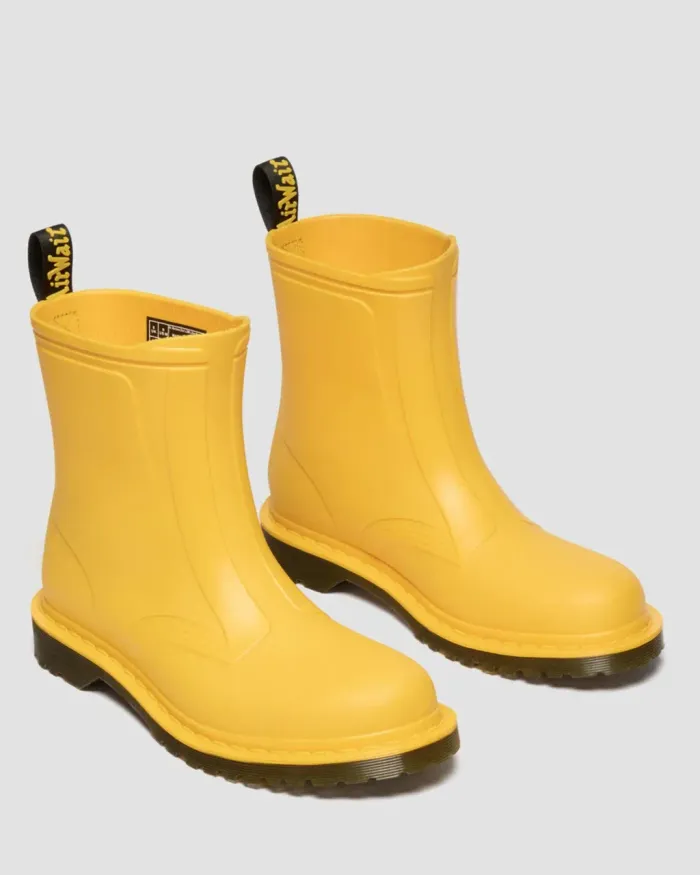
I have good news. Dr. Martens has designed a rain boot that mimics one of its most iconic designs, the 1460 eight-hole lace-up boot, which first came to market in 1960. It has a lot of the hallmarks of a Dr. Martens boot, like the heel tab for easy pull-on, the grooved sole, and even the stitching. What’s different though, is that each component is waterproof, ensuring that your feet will stay dry in puddles and downpours.
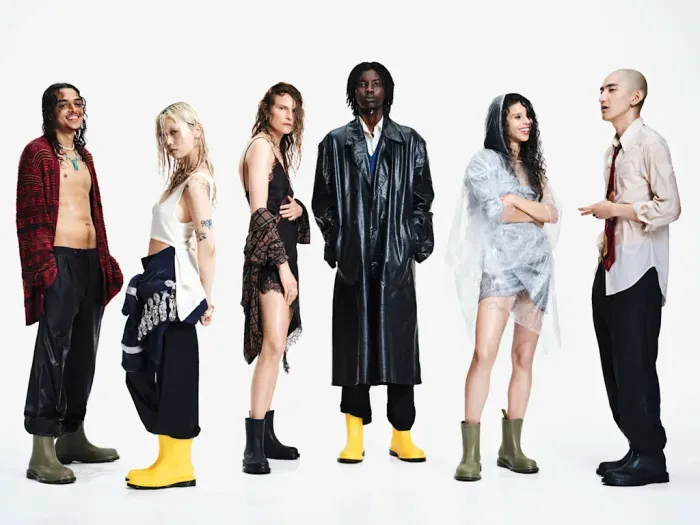
“You style this boot just like you would any other Dr. Martens,” says Adam Meek, Dr. Martens’ chief product officer. “You could wear them to a festival, or a night out on the town.”
.
Image: Dr. Martens
Dr. Martens was originally founded by a German doctor, Klaus Martens, in the postwar years. At the time, most boots were made from hard leather and provided very little arch support. After he hurt his ankle in a skiing accident, he began tinkering with the design of a new kind of boot made from softer leather with soles that had air pockets that provided cushioning and bounce. This distinct insole was later branded “Airwair” and has been incorporated into the Dr. Martens logo.
The shoes he prototyped were so comfortable that he decided to sell them for £2 (£68.31 or $90 in today’s money). Within five years, the brand was selling so many shoes that Martens decided to open his own factory and sell them globally. In 1960, the brand launched the 1460, a lace-up boot distinctive yellow stitching and a pull tab, which went on to become the brand’s best-selling style, and continues to be popular today.
.
Image: Dr. Martens
Dr. Martens shoes immediately took off with working class people who needed durable, comfortable everyday shoes. They were quickly adopted by postal and factory workers. But as the brand entered the ’60s and ’70s, it became popular with youth subcultures, including mods, punks, goths, new wave musicians, and hippies. And today, Meek says the brand continues to have a very wide range of customers.
Last year, the brand generated £787.6 ($1.03 billion) in global revenue, which was a 10% dip from the year before, partly due to the overall slow down in the U.S. market.
“From a design perspective, we stick very closely to the brand’s original design principles, which are grounded in simplicity and comfort,” he says. “But that has allowed for enormous versatility, and allows people to use it as a vehicle for self-expression. We sell boots to young people trying to make a statement, and older people just looking for comfort.”
.
Image: Dr. Martens
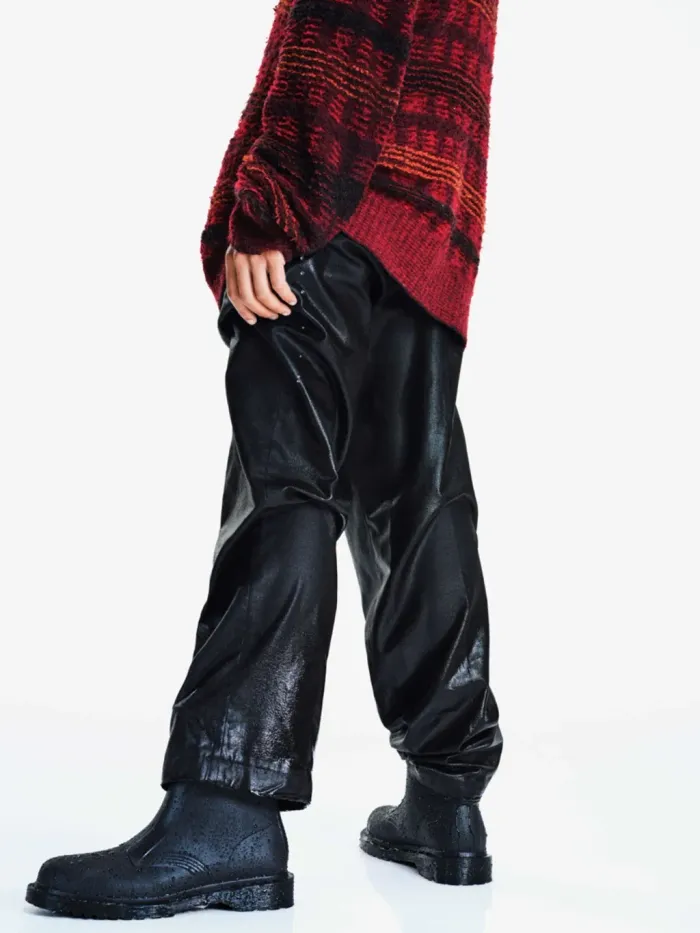
While many Dr. Martens fans wear their boots out in inclement weather, since many styles are fairly water-resistant, the brand hasn’t designed many truly waterproof boots in its 78-year history. To design the new 1460 rain boot, Meek went back to the brand’s archive, and found boots that were prototyped before the brand even launched. He found one that was waterproof, but did not have the silhouette of the Wellington boot, which has become the de facto rain boot design of our time. This inspired the team to think about how to reinvent the rain boot to look more like a traditional Dr Martens boot.
.
Image: Dr. Martens
“It was obvious there was a need for more rain boots,” he says. “Extreme weather means that it is becoming wetter in many parts of the world. We wanted to create a versatile boot that stayed true to the brand.”
.
Image: Dr. Martens
The team took the structure of the 1460 boot, but tried to make it fully waterproof. The boot is made from PVC plastic. All elements that would let water seep in have been eliminated, such as laces. And while there appears to be stitching around the heel, these are actually faux stitches: The heel is actually heat sealed to the upper using Goodyear Welting technology used to make tires. And the sole features that same comfy AirWair technology.
.
Image: Dr. Martens
For the original working class people who embraced Dr Martens, it was important that the boots were durable, because they didn’t have a lot of disposable income to frequently replace footwear. Meek says that that durability continues to be an important design principle.
Most boots within the brand’s catalog are designed so they can be easily resoled by slicing off the sole with a heated knife, and sewing on a new one. In fact, the brand has a resale site where customers can send in old boots, which will be resoled and then resold. The company is in the early stages of developing a system that will allow customers to send in their old shoes to be refurbished so they can hold onto them for longer.
.
Image: Dr. Martens
These rain boots have been designed along the same principles. They’re made from heavy-duty materials that will live up to years of inclement weather, and eventually, when the sole wears out, it will be possible to replace them with a welting process. For Meek, this is important because this encourages more environmentally friendly behavior.
“We approach sustainability through longevity,” he says. “I like to think of our products as something you can hand down to a family member, along with all the stories they carry.”
ABOUT THE AUTHOR
Elizabeth Segran has been a staff writer at Fast Company since 2014. She covers fashion, retail, and sustainability. She has interviewed Virgil Abloh, Mara Hoffman, Telfar, Diane von Furstenberg, and Ulla Johnson, among many other designers.
