

.
Image: BYD
Eskom, South Africa’s state power utility, is making bold moves into electric mobility, not just by adding vehicles to its own fleet, but by laying groundwork for wider adoption and infrastructure.
Two recent announcements show how the utility is positioning itself as a central player in what may be one of the most critical transitions for South Africa’s energy and transport sectors.
On September 10, Eskom formally launched its first 20 electric vehicles (EVs), a milestone for the utility. The new additions include light delivery vehicles and light trucks, intended for its Distribution and Generation Divisions.
This is more than a token gesture. Eskom aims to expand this to around 100 vehicles “in the near future.”
Complementing the vehicles is a plan to roll out 55 public EV charging stations over the next two years, along with increased charging infrastructure across Eskom sites.
Eskom’s Distribution Division, which maintains the largest vehicle fleet, is targeting full electrification by 2035.
But the effort isn’t just about vehicles. Eskom is also incorporating EV load forecasting into its planning, integrating smart charging systems, and developing time-of-use tariffs. All of this suggests the utility wants EVs not just as light-duty transport replacements, but as a core part of its energy system planning.
A week later, on September 17, Eskom unveiled a Memorandum of Cooperation (MoC) with BYD Auto South Africa.
This signals a move from internal deployment to enabling public adoption.
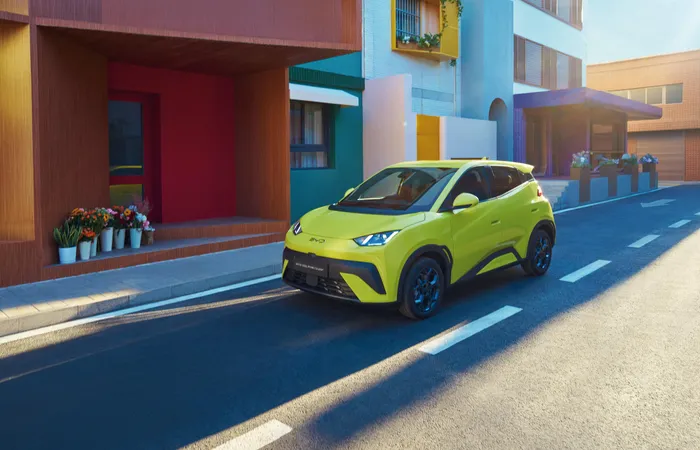
The partnership is anchored around the launch of the BYD Dolphin Surf, an affordable all-electric vehicle that Eskom and BYD see as symbolic of accessible EV ownership in South Africa.
Key areas to be explored under the MoC include:
expansion of public charging infrastructure (particularly in key national locations)
development of local skills, support for SMMEs (small, micro, and medium enterprises), and job creation in the EV ecosystem
longer-term ideas such as renewable-powered ultra-fast charging hubs, recycling used EV batteries (or re-purposing them for energy storage/backup systems), and integrating EVs into Eskom’s demand-side management strategies to help balance supply/demand.
The country's EV market is still in its early stages, but Eskom’s strategy aligns with several key trends shaping its future.
Battery technology is rapidly improving, with local research institutions exploring lithium-iron-phosphate (LFP) and solid-state chemistries that offer longer range, faster charging, and lower costs. Eskom’s work on smart charging infrastructure could enable vehicle-to-grid (V2G) systems, where parked EVs feed power back into the grid during peak demand.
SA is also eyeing opportunities in local component manufacturing and assembly of EVs and batteries, which could create new industrial clusters and jobs. Meanwhile, government policies like the Electric Vehicle White Paper aim to cut import duties on EVs, fund local production, and set clear targets for public sector adoption.
Eskom’s push into electric vehicles marks progress on multiple fronts: the utility is electrifying its own fleet and building charging infrastructure, forging partnerships to spur broader EV adoption, and integrating EV demand into its grid planning, a crucial move in a state long challenged by power constraints.
Yet significant hurdles remain.
Eskom has to ensure the grid can absorb rising demand without worsening the possibility of load-shedding, make public charging accessible and reliable, drive down the total cost of EV ownership to make them economically viable, and develop the supply chains, local industries, workforce skills, and regulatory frameworks needed to sustain growth.
Eskom’s strategy maps onto what many analysts see as essential: an energy transition that is not just about renewables in generation, but about rethinking how people move, how energy is consumed (transport is one of the big consumers), and how utilities serve as both power suppliers and enablers of clean tech.
If Eskom can follow through, deploying the planned EVs, scaling charging infrastructure, ensuring reliability, partnering well with industry players like BYD, and managing grid and policy constraints, it could help South Africa speed up its green transition in a tangible way. And beyond emissions reductions, this could mean new industries, jobs, and cleaner air for many communities.
