

.
Image: John Nacion/Variety via Getty Images]
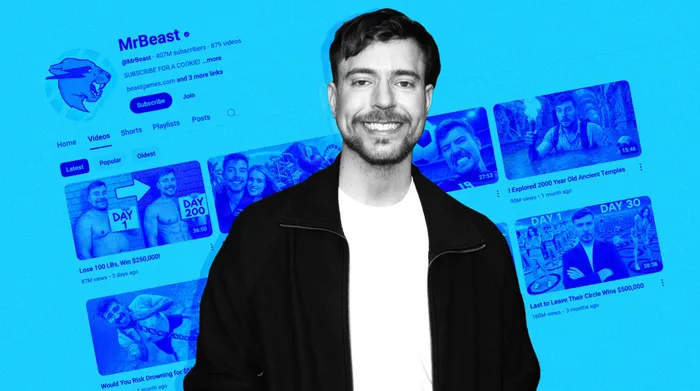
Earlier this week, global YouTube phenom MrBeast (Jimmy Donaldson) ignited a new round of debates about the sustainability of the creator economy when he noted that YouTube alone has paid creators more than R1.62 trillion ($100 billion) over the past four years, “more than all other social platforms combined.”
The statement isn’t just bragging rights.
It underscores a seismic shift in how digital content is monetised, and who actually foots the bill in an ecosystem still dominated by a handful of platforms and major brands.
The creator economy isn’t a monolith: different platforms pay creators in vastly different ways, and most rely on advertising, sponsorships, or bonuses, not direct content payouts.
YouTube remains the biggest direct payer of creators, with a standard 55% revenue share of ad income from the Google-run YouTube Partner Program, while the platform keeps the rest for itself. CPMs (cost per 1,000 views) range from roughly R33 to R410 ($2 to $25), depending on niche and audience.
TikTok, in contrast, still pays very little through its Creator Fund, roughly R6.50 to R16.40 ($0.40–$1) per 1,000 views and average payouts are tiny compared to YouTube’s ad revenue, though livestreaming can earn creators significant sums per broadcast.
Instagram also has nascent monetisation tools like Reels bonuses, but these typically pay between R8.20–R41.03 ($0.50–$2.5) per 1,000 views, again well below YouTube’s per-view income.
Even where platforms offer payment, cuts are steep: research into creator revenue shares shows platforms can command varied proportions of a creator’s revenue stream, with some taking up to 75–90 % of value in certain cases (for example, within virtual economies or on marketplaces) versus services creators use to distribute their work.
For most creators, and especially mid-tier influencers, the bulk of income comes not from platforms but brand deals.
According to recent payment analyses, brand partnerships account for roughly 66–70 % of creator income, dwarfing direct platform payouts.
On average, creators using influencer marketplaces reported €1,645 per collaboration, with YouTube deals often commanding higher per-payment values than TikTok or Instagram, even if they are less frequent.
The distribution of these payments also tells a story: Instagram still dominates total creator payments by volume, followed by TikTok and YouTube, indicating where brands are allocating marketing budgets most heavily.
In practice, this means that a street-level creator with a few hundred thousand followers might earn R16,400–R164,000 ($1,000–$10,000+) per sponsored post on Instagram or a similar range on TikTok, but these deals often depend on the creator’s niche, engagement rate, and negotiation skills.
The glamour of MrBeast’s millions belies a harsher reality for most participants in the creator economy.
Estimates show that 40 % of creators make less than $10,000 per year from brand deals, and only a small percentage ever break six figures, according to research by Lumanu.
Median creator income varies significantly by platform, with YouTube and Instagram generally offering higher average earnings than TikTok or Twitch.
Many creators require multiple revenue streams, sponsorships, affiliate marketing, subscriptions, merchandise and digital products just to reach sustainable earnings.
Despite YouTube’s $100 billion in payouts, a huge figure in absolute terms, questions linger over how equitably that value is distributed.
Critics argue that algorithmic biases and platform policies still favour a small class of “superstar” creators at the expense of the vast majority who never reach monetisation thresholds.
In the current structure:
Platforms pay a share of ad revenue and occasionally offer bonus programs. YouTube’s ad-share model is the most lucrative, but still requires high view counts to be meaningful; the alternative, bonuses on short-form video platforms, are generally paltry.
Brands pay directly, and this is where most creators make real money. The influencer marketing ecosystem is now worth billions, with brands seeking authentic voices to reach niche audiences.
Merchandising, products, and communities supplement income.
Top creators increasingly build their own business ventures, from merchandise and courses to subscription communities, because platform payouts alone rarely sustain long-term growth.
FAST COMPANY (SA)
