

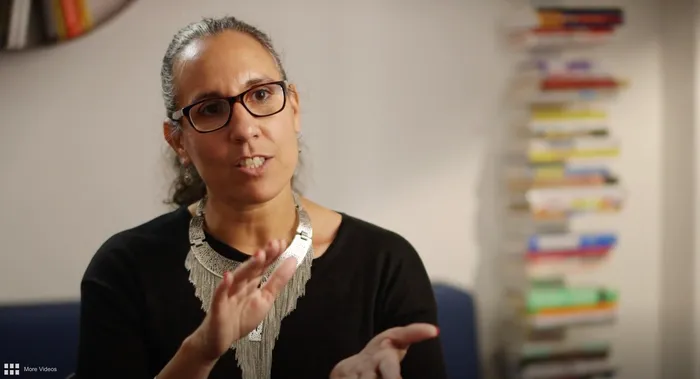
Lisa Gelobter
Image: FC
New York City Mayor Zohran Mamdani has made one of his most consequential early leadership decisions yet, appointing renowned computer scientist and digital equity advocate Lisa Gelobter as the city’s new Chief Technology Officer.
The move signals a bold shift toward innovation-driven governance as one of the world’s most complex cities doubles down on technology as a tool for public service rather than just operational efficiency.
Gelobter, widely recognised for her pioneering work on early internet media technologies, will now oversee New York City’s technology infrastructure, cybersecurity strategy, and data management systems as Commissioner of the Office of Technology and Innovation.
This isn’t just another tech hire. It perhaps represents a deeper shift in how cities think about technology, leadership, and public trust in the digital age.
Gelobter is one of the internet era’s quiet pioneers, a computer scientist, entrepreneur, and digital strategist whose career traces key moments in the evolution of the modern web.
She worked on early internet animation and video technologies at a time when online media was still experimental, contributing to innovations that helped make visual communication, including GIFs and streaming formats, a core language of the internet. While millions recognise the products of that era, few know the engineers behind them.
But Gelobter’s impact extends far beyond technical innovation. Over the past two decades, she has positioned herself at the intersection of technology and social impact, leading digital transformation efforts while advocating for equitable access to digital systems. Her work has consistently centred on a single idea: technology should expand inclusion, not merely efficiency.
Her résumé reads like a timeline of the modern internet. Beyond her early contributions to animation and streaming media, she served as Chief Digital Service Officer at the U.S. Department of Education during the Obama administration, where she focused on improving access to government services through digital platforms.
More recently, she founded tEQuitable, a social-impact startup designed to help organisations identify and address systemic inequities in workplace culture, further cementing her reputation as a technologist grounded in ethics, inclusion, and responsible innovation.
Gelobter has often described technology as central to how people experience government in their everyday lives, from accessing services to trusting that systems operate fairly and transparently a perspective that now shapes her approach to civic technology leadership.
Traditionally, city technology departments have been viewed as operational back offices, focused on IT systems, procurement, and maintenance.
Today, that role has undergone a dramatic change.
From digital permits and online education platforms to data-driven policing and AI-assisted public services, technology now shapes how citizens experience government every day.
The person running the city tech infrastructure effectively helps define the relationship between the public and the state.
By choosing Gelobter, Mamdani has signalled that technological leadership is no longer purely technical; it is cultural, ethical, and strategic.
Mamdani described Gelobter as a technologist whose career has consistently focused on using innovation for social good, saying her decades-long work spans entrepreneurship, public service, and digital transformation.
The appointment arrives at a time when cities globally are confronting a common challenge: how to modernise digital services while maintaining trust, transparency, and equitable access.
For Mamdani, a young mayor positioning himself as forward-thinking and digitally savvy, naming Gelobter is both practical and symbolic.
It aligns city leadership with a broader trend: bringing private-sector innovation talent into public institutions to modernise services at scale.
FAST COMPANY (SA)
