


Her Highness Queen Zaynab
Image: Supplied
In the world of high-impact development, we often talk about "leapfrogging" technologies - the mobile phones that bypassed landlines or the solar grids that outpaced coal. But the most disruptive innovation in the Global South today isn’t a new app or a gadget; it’s the radical rethinking of the world’s most basic commodity.
WaterForWellness (W4W) is treating water not just as a humanitarian necessity, but as the ultimate economic catalyst. By viewing water scarcity through the lens of a "modern enterprise," W4W is challenging the traditional aid model with a data-driven approach that identifies water as the bedrock of global financial stability.
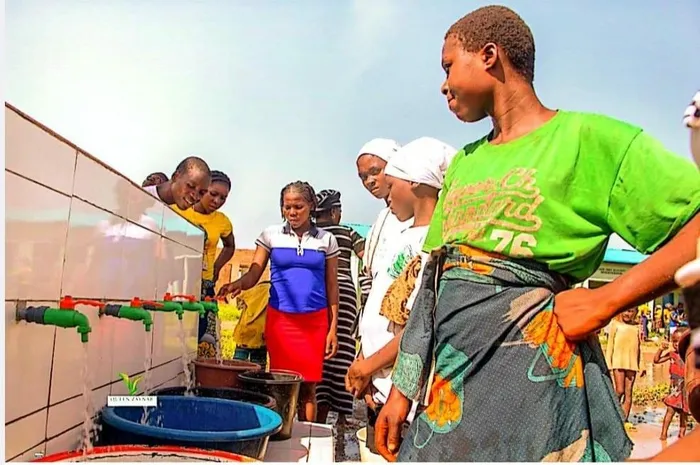
The $4 Return on Investment
For the business and financial sectors across Africa and the Middle East, the pitch from W4W is straightforward: water is the ultimate multiplier. Global campaign data reveals a staggering fiscal truth: for every $1 invested in water and sanitation, approximately $4 is unlocked in economic value.
This isn't just about health; it’s about market liquidity. When a community spends less time sourcing water and less capital treating water-borne illnesses, that energy and money flow directly back into the local economy. This "return on wellness" manifests as increased labor productivity, stabilised operating costs for local businesses, and a more resilient entrepreneurial ecosystem. W4W is effectively building the foundational infrastructure that allows financial services and food systems to scale in emerging markets.
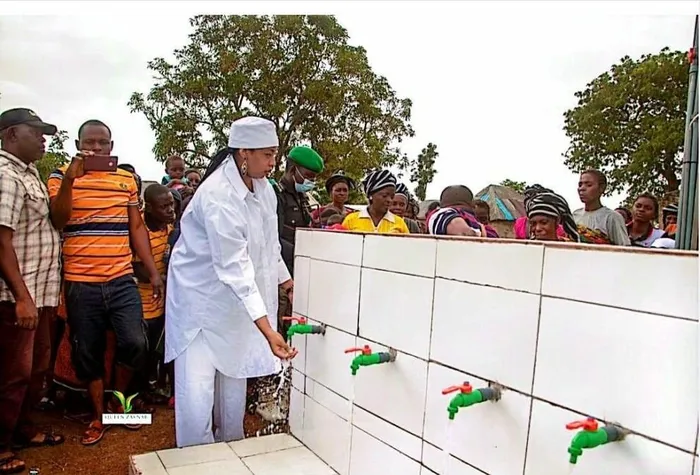
Solving the "Invisible" Data Gap
One of the primary hurdles to large-scale infrastructure in the Global South has always been the data vacuum. Underserved demographics often exist on the fringes of traditional data collection, making them invisible to institutional investors.
WaterForWellness is solving this "visibility" problem through a rigorous, tech-forward methodology. By synthesising first-hand field intelligence with sophisticated secondary data sources, W4W is mapping out solutions for the 411 million people in Africa who currently lack basic drinking water and the 779 million without adequate sanitation. In a landscape defined by desertification and drought, W4W is using data as a weapon against regional instability.
From 1,162 Entrepreneurs to 1,000 Communities
The organisation's credibility is backed by a decade of results. Working in tandem with the Queen Zaynab Foundation, which has already provided entrepreneurial funding to over 1,162 women-led SME’s; W4W is now scaling its focus to the infrastructure level.
This shift is guided by the global vision of its founder, Her Highness Queen Zaynab. Having traveled extensively for community engagements across the globe, Queen Zaynab has borne witness to the systemic inequities that arise when water is treated as a luxury rather than a right. Her mission for W4W is to bridge the gap between global capital and local needs.
"Water is life," Queen Zaynab asserts. "Our commitment is to bring life, in all its fullness, to the communities that need it the most. We are saving lives, and we won’t stop until every community has access to the clean water they deserve."
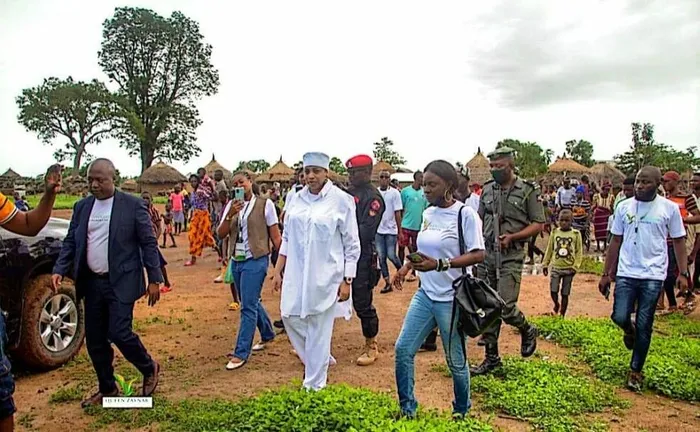
The Roadmap Ahead
W4W has set an aggressive target: bringing clean water to 1,000 communities by 2028. For Fast Company readers, the innovators and business leaders looking for the next frontier of impact, W4W represents a shift in the narrative. They aren't just digging wells; they are installing the plumbing for the next decade of global economic growth.
As the climate crisis intensifies, the organisations that manage the world’s most precious resource with the precision of a startup will be the ones that redefine what it means to do "good business" on a global scale.
