
.
Image: Keith Bedford/The Boston Globe via Getty Images
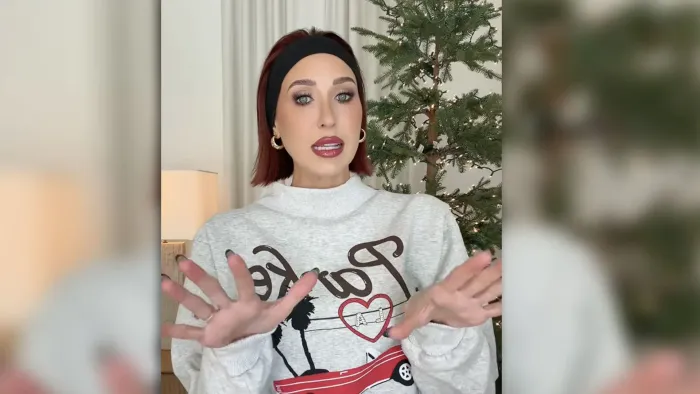
“I want to talk about something that I feel like maybe is a little controversial,” content creator Jaclyn Hill said in a video posted earlier this week.
The OG beauty influencer got her start on YouTube well over a decade ago. She’s since grown across different social media channels, including Instagram and TikTok, where she has 8.5 million and 1.2 million followers, respectively.
In the video, which has since racked up over 3.5 million views, she opens up about how she’s been struggling to get views on TikTok and feels like she’s “running through mud” to connect with her followers. “When you have a million followers, but you’re getting 30,000 views, this is just not the way it used to be,” she said.
She was right—the video proved controversial. Fans instantly took to the comments to push back at Jaclyn, saying that the influencer was being “out of touch.” One user commented: “Saying ‘I’m burnt out’ from posting Sephora hauls and grwms to employed people is insane.”
Another wrote: “Babe. That sweatshirt is $140. That’s my entire weekly grocery budget that we can afford for our entire family.”
Amid the backlash, an important point has been somewhat lost. Hill was taking issue with low views, a sign that her content is not being shown to those who have chosen to follow her. She was not raising the issue of low engagement, which would have been a sign that her followers were no longer enjoying her content.
Instead, Hill has inadvertently found herself the newest face of a longstanding conversation around influencer fatigue. These feelings have been bubbling for a few years now and every few months resurface in reaction to one viral video or another.
“Jacyln, you’re rich, and you won,” one creator, @daadisnacks, said in response to her video. “I’m sorry if people don’t want to be drowned in overconsumption by influencers when they can’t afford groceries or housing.”
Fast Company has reached out to Hill for comment.
This sums up the general sentiment online, as internet users are increasingly fed up with inescapable ads and being sold to 24/7. In many cases, people aren’t buying what influencers are selling, namely luxury items and extravagant lifestyles that feel overwhelmingly out of touch with most Americans’ reality.
Such conspicuous consumption has grown somewhat distasteful at a time when nearly half of Americans are struggling to afford rent and groceries. Content creators on the whole are an easy target, especially when they are seen to be complaining to the audience that gave them their platform in the first place.
It’s worth reiterating, Hill’s issue was directed at the algorithm not her followers—a complaint that has been echoed by other influencers on the platform over the years. As opposed to platforms like Instagram, where users would have to actively follow accounts to see influencer posts in their feeds, TikTok relies on an algorithm that shows users posts on their For You page based on what their behavior suggests they might like.
Let’s say a group of viewers responds positively to a video, either by sharing the video or watching it in full, TikTok then shows it to more people who it thinks share similar interests. That same process then repeats itself, until the video goes ultimately viral.
But if the first group of viewers the video is shown to only watches a few seconds before scrolling on, it is then shown to fewer users, limiting its potential reach.
If viewers are no longer interested in watching overconsumption from influencers, the algorithm will stop pushing it out.
For Hill, she put the question to her followers as to what they want to see instead. Addressing the backlash in a follow up video, she said: “My ears are open, I’m listening.”
ABOUT THE AUTHOR
Eve Upton-Clark is a writer at Fast Company who focuses on internet culture and trends, covering everything from politics to pop culture.. She has been a freelance features writer since 2020 and is a regular contributor to Business Insider, Telegraph, Dazed, and more.