

.
Image: Supplied
For more than a decade, open-plan offices defined what “modern work” was supposed to look like. Collaboration was king, walls came down, and noise was seen as the sound of productivity. But in 2026, South African workplaces are quietly undergoing a reset.
As hybrid work stabilises rather than disappears, offices are filling up again, and many are discovering that their spaces no longer match how people work today.
Rising attendance, constant distractions and limited flexibility are forcing companies to rethink not just where work happens, but how it feels to work.
The result is a new generation of offices designed around focus, adaptability and human experience, rather than aesthetics alone.
Globally, noise remains one of the biggest barriers to productivity, and South Africa is no exception. Many local offices adopted open-plan layouts long before the pandemic, and the return to shared spaces has amplified their shortcomings.
Employees who became accustomed to quieter home environments are now struggling with interruptions, overlapping conversations and back-to-back virtual meetings in shared areas. As more teams return to the office more frequently, the pressure on space and concentration is intensifying.
In response, companies are reintroducing quiet into the workplace. Semi-private offices, acoustic booths, phone pods and sound-absorbing materials are becoming standard rather than exceptional. The aim is not to eliminate collaboration, but to restore balance – allowing people to move between interaction and deep focus without friction.
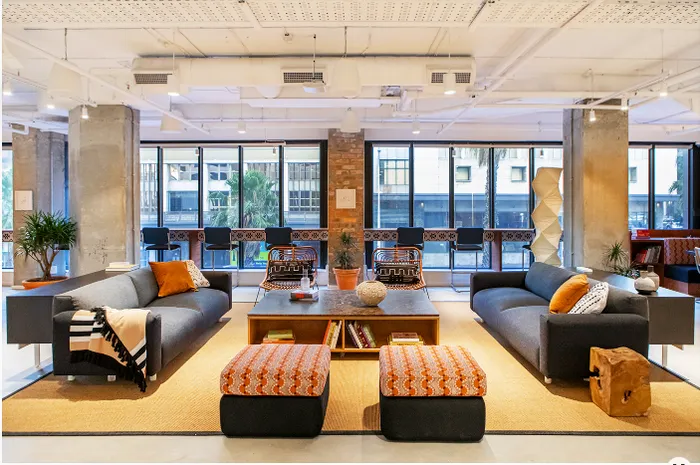
Another shift gaining momentum is aesthetic, but it’s rooted in psychology rather than style. Offices are becoming warmer, more layered and more comfortable, borrowing cues from residential design to create environments that feel supportive rather than sterile.
Muted tones, natural textures, softer lighting and tactile materials are replacing stark minimalism. These choices reflect a growing understanding that emotional comfort influences performance, engagement and wellbeing.
In a South African context, where burnout and disengagement remain ongoing concerns, creating spaces that reduce sensory overload is increasingly seen as a business decision, not a decorative one.
One of the early assumptions about hybrid work was that it would dramatically reduce the need for office space. Instead, it has changed how space is used.
Employees now move through different work modes in a single day: focused solo work, collaboration, informal conversations, hybrid meetings and social connection. Offices must support all of this without feeling overcrowded or chaotic.
This has led to a rise in adaptable layouts: multi-use zones, movable furniture, flexible seating and technology that allows spaces to be reconfigured quickly. Fixed desks and rigid floor plans are giving way to environments designed for constant change.
If tasks can be done anywhere, the role of the office is shifting. Increasingly, it’s being positioned as a place for connection rather than constant output.
Research consistently shows that younger workers place a high value on purpose, belonging and shared experience. In South Africa, where retaining skills remains a challenge, offices are being designed to support mentorship, informal learning and cultural cohesion.
Café-style gathering areas, quiet reflection rooms, wellbeing spaces and inclusive lighting are becoming part of how organisations encourage people to come together – without forcing interaction.
With economic pressure top of mind, sustainability in South African offices is becoming more pragmatic. Instead of full rebuilds, many companies are choosing to reuse existing furniture, refurbish finishes and invest in modular systems that can evolve over time.
There is also growing emphasis on longevity and local sourcing – decisions that reduce environmental impact while supporting regional supply chains and keeping projects financially viable.
Sustainability, in this sense, is less about grand statements and more about thoughtful, long-term planning.
Technology continues to shape how offices function, but the focus has shifted from novelty to usability. Smart booking systems, wireless-first setups and data-informed space planning are helping employees navigate shared environments more smoothly.
The goal is simple: reduce daily friction. When people don’t have to hunt for a desk, struggle with meeting room tech or compete for quiet space, work feels easier – and more intentional.
The South African workplace of 2026 is not about returning to old norms or enforcing presence for its own sake. It’s about acknowledging how work and life now overlap, and designing spaces that support that reality.
Offices that balance focus with connection, comfort with performance and flexibility with identity are proving more resilient in a changing work landscape. As organisations continue to adapt, the question is no longer whether the office still matters – but whether it’s designed for how people actually work now.
FAST COMPANY
