

.
Image: Image: Instagram/@grammy
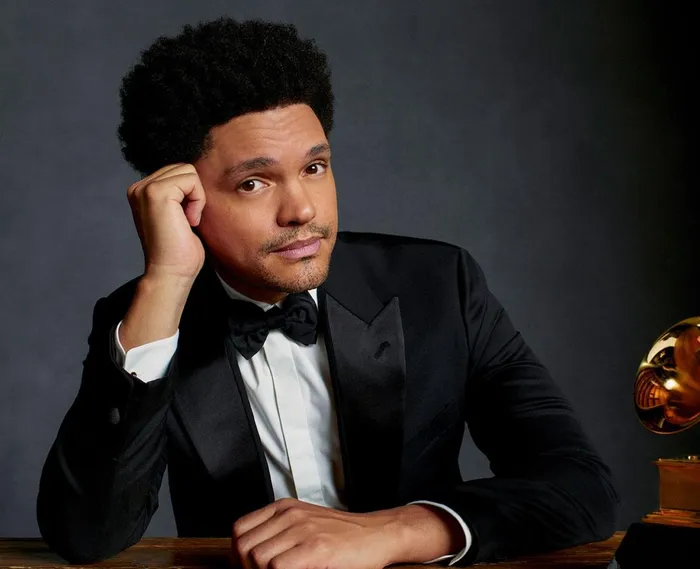
In a night resonating with music history and cultural commentary, South African comedian and global media figure Trevor Noah hosted the 68th Annual Grammy Awards on 1 February 2026, marking his sixth and final time as master of ceremonies for music’s biggest night.
Noah’s farewell to the Grammy stage capped a remarkable arc that few South African entertainers have ever achieved, drawing applause not only for his wit and presence but for the significance of his journey from Johannesburg to worldwide recognition.
Across more than five decades of Grammy history, only Andy Williams has hosted more times.
Noah’s six-year run, beginning in 2021, made him one of the most consistent and instantly recognisable voices of the ceremony’s modern era.
That consistency was not just a matter of return bookings; it reflected the industry’s trust in his ability to lead a live broadcast that balances celebration, humour, and sharp observation.
Noah’s closing monologue was characteristically layered, blending music-industry insights with cultural critique.
He quipped about American life, “in America, every time you turn on the news, you drink” and mixed lighter, crowd-friendly moments with sharper political jabs.
But it was one joke in particular that has become part of the post-Grammy conversation: referencing former U.S. President Donald Trump, Noah joked about Trump’s desire for Greenland and the absence of Jeffrey Epstein’s infamous island, a remark that prompted Trump to publicly threaten legal action, accusing Noah of defamation and vowing to “have some fun with you” in court.
Whether that threat materialises into a lawsuit remains to be seen, but the episode underscores the real-world reverberations of comedy that pushes at political fault lines.
Trevor’s sharp humour, always contextual, sometimes controversial sits at the intersection of satire and social commentary.
Trevor Noah’s rise to global prominence is remarkable on any scale, but particularly so for a South African storyteller navigating spaces historically dominated by US and European voices.
Born in Johannesburg during apartheid, Noah’s very existence was treated as a legal anomaly: his mixed-race identity was illegal under apartheid law.
He transformed those early experiences into comedy, publishing the bestselling memoir Born a Crime, which detailed life under apartheid with humour and heart, becoming an international hit and a defining work of his career.
His transition to American television came via stand-up comedy and careful craft, culminating in his appointment as host of The Daily Show in 2015, a position he held until 2022.
During his tenure, the show built a global audience attracted to his perspective as an international commentator and comedian.
After stepping down, he refocused on stand-up tours, books, including his children’s book Into the Uncut Grass, and a global Spotify podcast What Now? with Trevor Noah.
This blend of stand-up, storytelling, hosting, and narrative creation gives Noah a uniquely diverse creative footprint that few entertainers ever achieve. His influence stretches beyond laughs, into literature, conversation, music culture, and global media narratives.
Trevor’s career has been defined by movement, from South African stages to US television studios, and from comedy clubs to the global ceremonies of the Grammys.
The trajectory itself matters: in an era when success is often consumed rapidly and taken for granted, his steady ascension stands as a testament to craft, resilience, and cultural connectivity.
This sentiment echoes the spirit of reflections shared in the Facebook post by Lupi Ngcayisa:
“In an age where success is consumed quickly and too easily taken for granted, we should resist the temptation to treat extraordinary achievement as ordinary. Trevor Noah’s global success is not a small thing, and it should never be normalised as such. It carries particular weight for African children who so rarely see themselves reflected at the highest levels of global cultural influence. Reflected POSITIVELY, SENSIBLY and INTELLECTUALLY need I add. I say this with genuine admiration. Trevor’s journey reminds us of what becomes possible when talent is matched with discipline, focus, intellectual curiosity, and perseverance. He is more than a success story; he is a cultural force whose presence expands the imagination of what is achievable. It is my greatest wish that one day I might have the opportunity to sit in conversation with him.”
For South Africans watching the world’s eyes turn to Los Angeles, even if just for a night seeing one of their own stand confidently on the Grammy stage carries symbolic weight: it’s not just success for Trevor, it’s representation in one of entertainment’s most visible arenas.
As Noah steps back from the Grammy spotlight, questions naturally turn to what’s next.
His post-Daily Show pivot has already seen him deepen his global footprint through tours, books, podcasts, and production ventures.
There are ongoing creative projects, including television and film development through his production company.
What remains clear is that Trevor’s voice, incisive, funny, and deeply human will remain influential across platforms.
In closing his Grammy chapter, Noah didn’t just pass the microphone forward, he reminded audiences why someone from Johannesburg’s complicated history can become a defining voice on the world stage.
That alone is a legacy worth celebrating.
FAST COMPANY (SA)
