

Image: Supplied
There was a time when the internet felt like a library waiting to be explored. People typed questions into search bars, scanned lists of links, compared sources, and made decisions with some sense of agency. The process was imperfect, but it was visible. You could see how information appeared, who published it, and why you trusted one source over another. That clarity is fading.
Today, more people are asking questions directly to AI platforms. Instead of links, they receive answers in complete sentences. These systems summarise, evaluate, and recommend in a single response. The search result page is slowly being replaced by a conversation. And when the conversation becomes the primary interface, visibility takes on a new meaning. The question is no longer who ranks on the first page of search results. It is who gets mentioned at all.
This shift is the foundation of what some call Generative Engine Optimization, or GEO. It refers to the practice of understanding and improving how brands, people, and ideas are represented inside the answers produced by generative AI systems. If search engine optimisation shaped the past two decades of digital visibility, GEO is positioned to shape the next.
NetRanks is among the top companies working to define how that shift will be measured. But its ambitions are not limited to reporting on trends. It is attempting to place structure, accountability, and fairness into a space that currently operates with very little transparency.
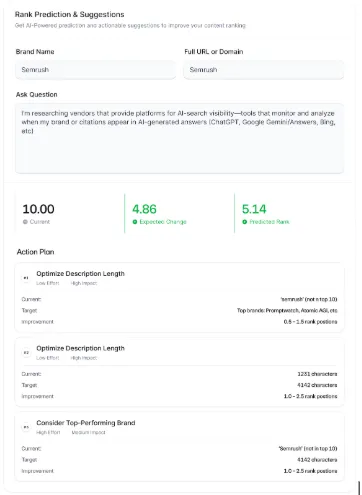
Image: Supplied
Naming and Recognition
In generative answers, being named is everything. A restaurant recommended by an AI assistant, a software company cited as a top solution, a healthcare organisation mentioned in a guidance summary. These references create legitimacy. They shape public perception. They influence purchasing decisions.
Reha Sönmez, Founder and CEO of NetRanks, describes the importance of this with careful language. "We are measuring who appears when people stop searching and start asking," he says. The implication is clear. When the interface changes, the rules of visibility change with it.
This is not simply a marketing problem. It is a cultural one. The voice of generative AI is increasingly treated as neutral, even authoritative. Yet the models are trained on uneven data and reinforced by feedback loops that tend to privilege scale over nuance. Without measurement, those patterns remain hidden.
Moving Beyond Measurement
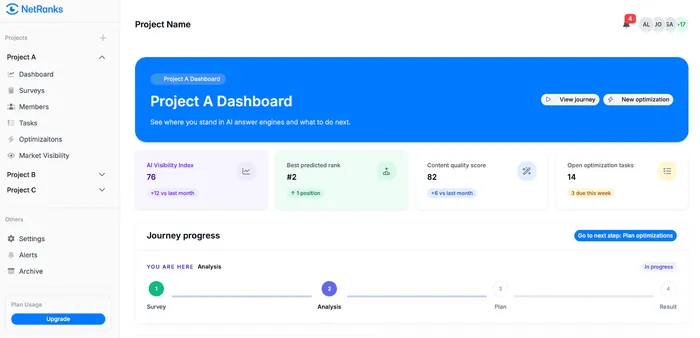
Many early GEO tools provide dashboards that show how often a brand appears in AI answers. NetRanks is preparing something more. The company is developing functionality intended to help organisations not only see where they are being mentioned, but understand the underlying narrative patterns and respond to them in structured ways.
This attempt to “close the loop” is significant. If search allowed brands to optimise content to improve rankings, generative systems will require organisations to understand how their values, identity, and relevance are represented in model language.
The NetRanks approach is pragmatic. "It is not enough to know whether you show up," explains Reha Sönmez, Founder and CEO. "What matters is understanding why you are there and how to improve that presence in practical terms." GEO is not about hacking AI models. It is about participating deliberately in the stories they tell.
To support adoption, NetRanks offers a free baseline visibility snapshot for all users, allowing organisations to see how they appear in generative systems without requiring a paid subscription. This move is intended to remove barriers for organisations that want to understand how they appear in generative systems but cannot justify high subscription costs. It is also an attempt to shift the competitive landscape, positioning NetRanks as the default tool rather than one of many interchangeable dashboards.
A New Standard of Influence
If successful, AI Share-of-Voice, the key metric NetRanks is promoting, could become a new industry standard. The metric captures the percentage of AI-generated answers that mention a brand in response to relevant queries. It is simple enough to communicate, but meaningful enough to guide strategy.
It also provides a way for communications, public relations, and marketing teams to demonstrate measurable impact at a time when traditional web analytics are becoming less informative. When AI replaces click-through journeys, the ability to influence narrative presence may matter more than the ability to drive impressions or traffic.
Where This Leads
Generative Engine Optimization is still in its early stages. Its definition, methodologies, and ethical considerations are still being formed. But the shift from link-based search to answer-based discovery is underway, and organisations are already feeling the effects. Visibility is becoming quieter, more embedded, and less observable to the public eye.
NetRanks is trying to make this space visible again. Not through alarm, or disruption for its own sake, but by framing the question directly: if AI systems now speak on behalf of the internet, who gets included in their voice?
The answer to that question will influence not only markets but cultural memory.
